
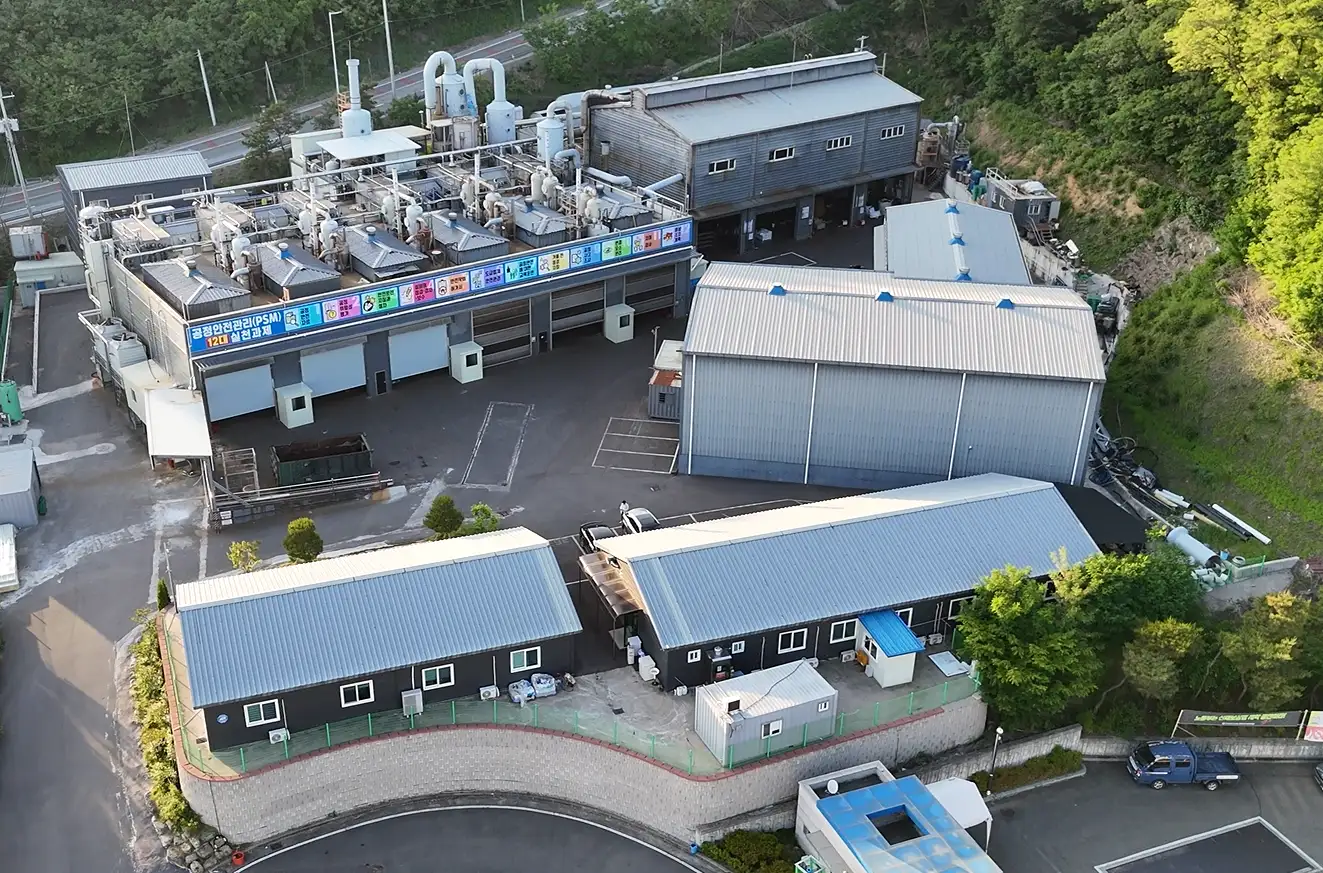
Technology & Process
Our technology and the flow of the pyrolysis process.
Technology
Our technology
Founded in 2019 on marine waste oil pyrolysis and waste plastic pyrolysis technologies, we have refined our process with the operating experience accumulated since commercial operation began.
- 01
Direct feed without pre-treatment
Sorted and collected waste synthetic resins are fed directly into the pyrolysis process without separate pre-treatment, saving pre-treatment equipment, energy and cost.
- 02
Accumulated operating know-how
We have developed operating know-how to manage problems that frequently occur in recycled oil production, such as pipe blockages, maintaining a high utilisation rate of 25 or more operating days a month.
- 03
Process gas reused as heat source
Most of the gas generated during processing is scrubbed and reused as the heat source for the reactors, minimising CO₂ emissions compared with simply flaring the gas.
Process
Process
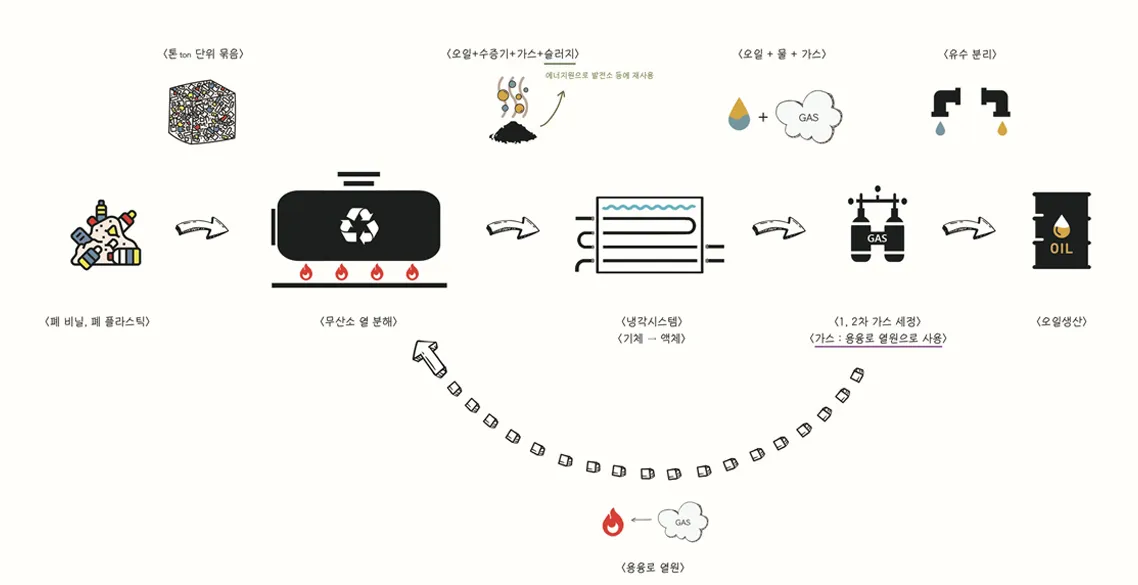
How waste plastic film and plastics become pyrolysis oil. Gas generated during the process is returned to the reactors as a heat source.
- STEP 1
Feedstock input
Compressed and baled waste synthetic resins are fed into the reactor by the tonne.
- STEP 2
Oxygen-free pyrolysis
Heated in the absence of oxygen, the polymers break down into oil, steam, gas and sludge. The sludge is reused as an energy resource, for example at power plants.
- STEP 3
Cooling system
The gaseous products are cooled and condensed into liquid (gas → liquid).
- STEP 4
Primary & secondary gas scrubbing
Oil, water and gas are separated, and oil is separated from water. The remaining gas is reused as the heat source for the reactors.
- STEP 5
Oil production
After post-treatment, the pyrolysis oil is stored in tanks and shipped to customers by tanker.