
Facilities
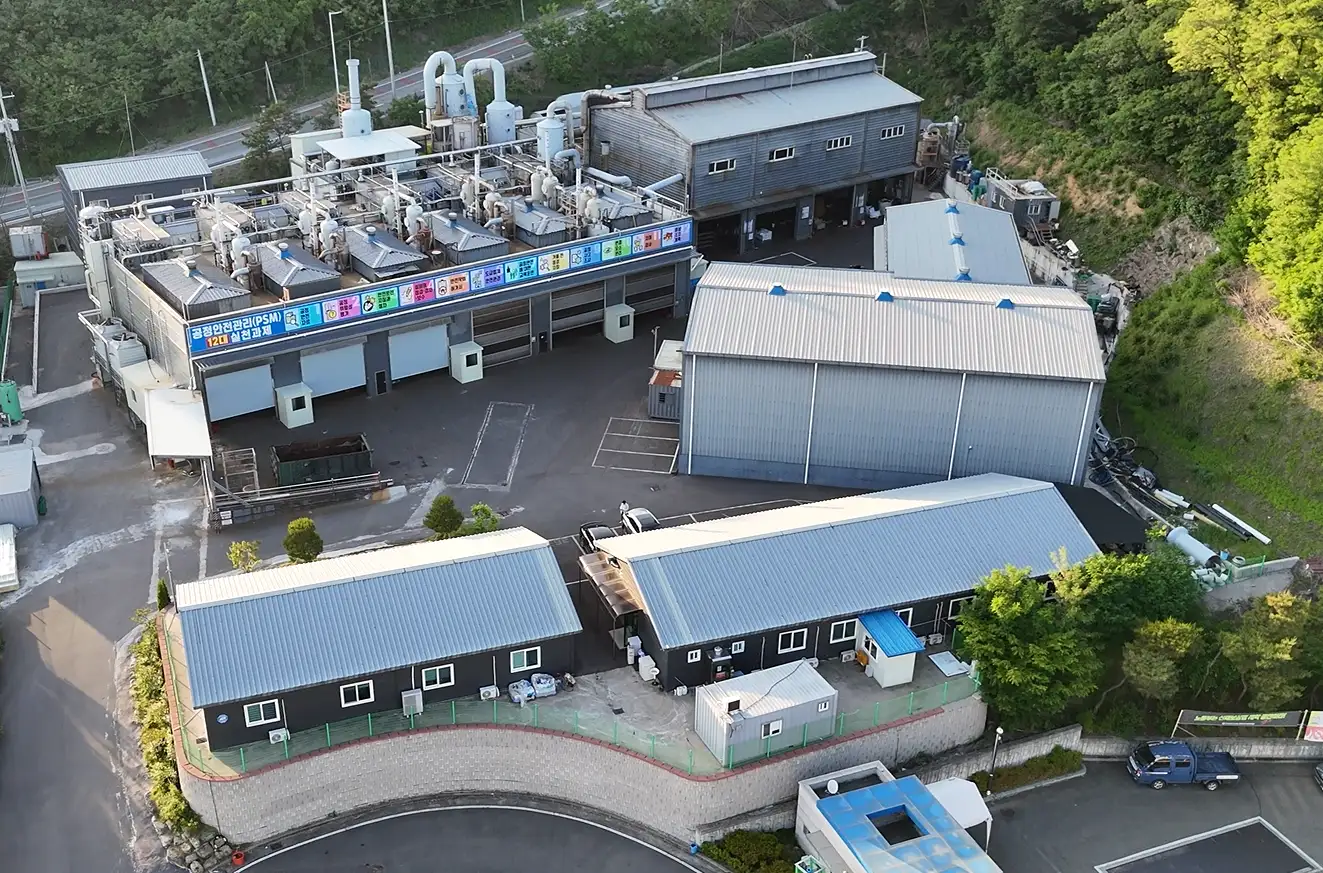
Korea's largest pyrolysis plant, operating 25 or more days a month
Facility
Korea's largest waste plastic pyrolysis plant
INGENT's pyrolysis plant is currently the largest of its kind in Korea, producing pyrolysis oil steadily with a high utilisation rate of 25 or more operating days a month.
- Waste plastic processing capacity
- 24,000tonnes/yr
- Pyrolysis reactors
- 10
- Head office and plant site
- 8,401m²
- Pyrolysis-related IP rights (incl. 4 patents)
- 6
Highlights
Facility highlights
Korea's largest waste plastic pyrolysis plant
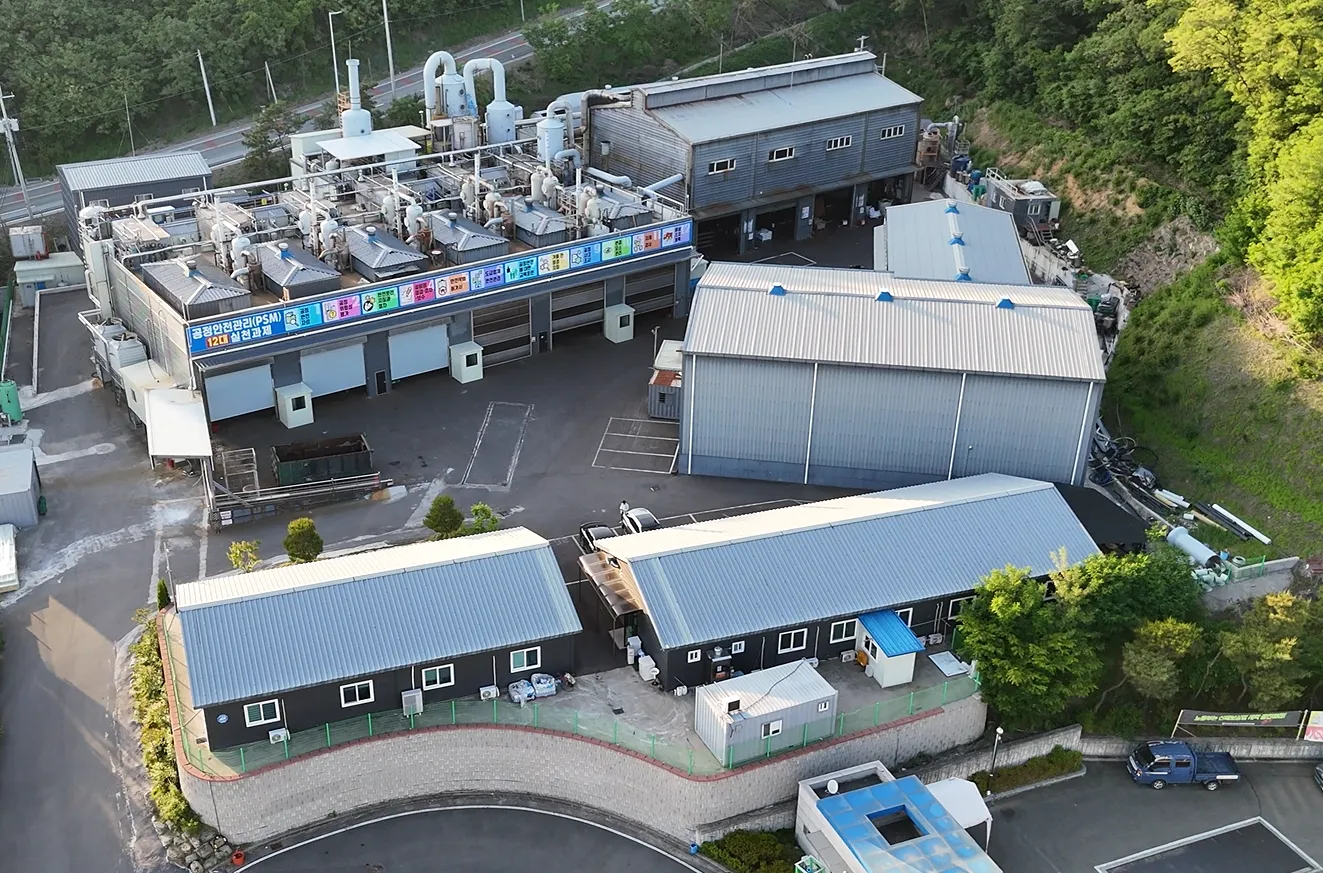
Our Gyeongju plant, the largest of its kind in Korea, processes 24,000 tonnes of post-consumer plastic film and plastics a year into pyrolysis oil.
First ISCC PLUS in Korea's pyrolysis industry
In February 2022 we became the first pyrolysis company in Korea to obtain ISCC PLUS, the international sustainability certification, confirming the sustainability of our recycled feedstock.
Industry-first carbon credit methodology
In March 2023 our methodology for greenhouse gas reduction from waste plastic pyrolysis was approved, the first of its kind in the industry.
Industry-first PSM approval
In May 2025 we became the first pyrolysis company to receive Process Safety Management (PSM) report approval, an official verification of safe plant operation.
10-year supply contract with HD Hyundai Oilbank
Our entire pyrolysis oil output is supplied to HD Hyundai Oilbank under a 10-year contract, securing a stable offtake.
ESG in practice
Together with Seosan City and HD Hyundai Oilbank, we run a dedicated collection-bag campaign for used plastic film and plastics, building resource circulation with local communities.
Recycling Process
How waste plastic is recycled
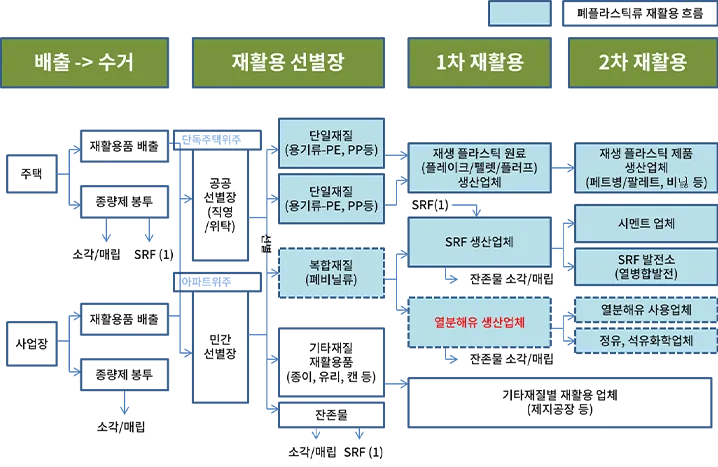
Plastics and film separated at homes and businesses pass through sorting facilities to primary and secondary recyclers. In this flow, INGENT is the pyrolysis oil producer that converts mixed-material plastics and film, which are hard to reuse as recycled resin, back into oil.
Pyrolysis Oil
What is pyrolysis oil?
Pyrolysis heats polymer waste, not only plastic film and plastics but also rubber, tyres and synthetic resins, in an oxygen-free reducing atmosphere, breaking it down into lower-molecular-weight substances that can be recovered. The resulting gas is cooled and condensed into recycled oil, known as pyrolysis oil.
Plastic pyrolysis begins at around 200°C. PE starts to decompose at 290°C, forms large amounts of waxy material up to 370°C, decomposes in earnest above 400°C and breaks down completely at 480°C. PP begins to decompose at 420°C and breaks down completely at 480°C.
Advantages of pyrolysis oil
-25%
Up to 25% lower CO₂ emissions compared with simple incineration.
Feedstock
Recycled as feedstock for refineries and petrochemical companies (permitted under Korea's regulatory sandbox since September 15, 2021).
80 t
Used as fuel oil, 100 tonnes of pyrolysis oil replaces imports of 80 tonnes of crude oil.
100%
Used as refinery feedstock, it replaces crude oil imports at a rate of 100%.
It also saves landfill and incineration costs and can replace Bunker C fuel oil in boilers and similar equipment.
Catalogue
ING OIL (pyrolysis oil) catalogue
Product specifications, quality standards and test results for ING OIL, our pyrolysis fuel oil, in a 5-page English catalogue.
- 01
Why ING OIL
A pyrolysis fuel oil with a higher calorific value than Bunker C at a lower price, with neutral acidity, stable viscosity and low sulfur.
- 02
What ING OIL is
A liquid industrial fuel recovered from waste plastics and film, classified as renewable energy under Korean law.
- 03
Quality standards
Reference limits applied to recovered fuel oil in Korea and abroad, item by item.
- 04
Test results
Certificate of test from the Korea Petroleum Quality & Distribution Authority (K-Petro), including net heat of combustion.